Langstaff Lock & Key SpecialistsService bulletin 3 of 3
Smart Lock Installation: inside the visit
Our winters shape how a smart lock should be fitted.
Vaughan, Ontario · Locksmith · open 24/7
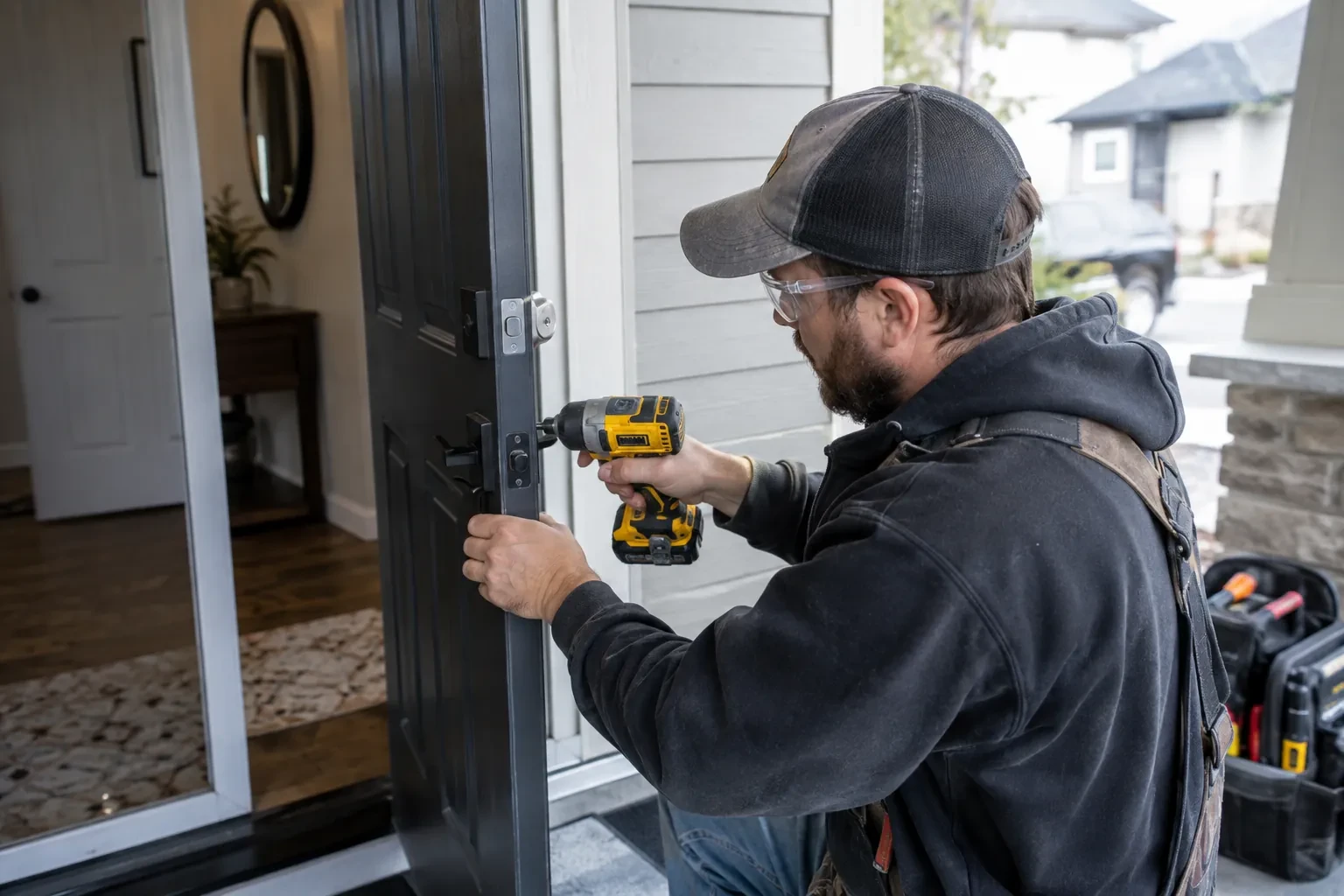
Our winters shape how a smart lock should be fitted. Cold drains batteries sooner, so the locksmith fits the maker's specified battery type, sets the low-battery alert to reach a checked phone, and shows how a fresh set goes in with gloves on. Meltwater that refreezes overnight can bind a bolt, so the strike is set to give the motor clearance. A storm door that traps summer heat, or a keypad facing driving snow, steers the choice of model and finish. Fitted this way, a smart lock is set up to perform through the cold months, even though batteries and materials still work harder in deep winter than in June.
Measuring the door and its holes
Smart locks are built around the standard residential preparation, so the locksmith measures before choosing. Door thickness is usually between 35 and 45 millimetres; thicker doors need an extension kit and very thin ones may need a different model. The large cross bore for the cylinder, the smaller edge bore for the bolt and the backset from the door edge to the centre of the hole are each checked against the new lock's range. A lever set also needs the handing confirmed. Steel and fibreglass doors, doors with a mortise pocket from an older lock, and doors with glass close to the handle each change what will fit and how it is mounted.
Power up and teach the lock its door
Once the hardware is tight, the lock gets the batteries its maker specifies, all fresh and all the same type, since mixing old and new cells shortens the life of the set. Most models then run a short calibration in which the motor learns which way is locked, how far the bolt travels and where it meets resistance. The locksmith runs this exactly as that model's instructions direct, door open or closed depending on the maker, then cycles it several times from the keypad and the thumb-turn while listening for a motor that strains. If the lock has a door-position sensor or a magnet to fit on the frame, it is placed and confirmed at this stage.
Knowing what works when the internet is out
You leave with a clear picture of what the lock does on its own. On most models the keypad, the key and any fob keep working with no network at all, because they talk to the lock directly; what needs the internet is checking or changing the lock from far away and receiving alerts. Codes and schedules stored in the lock carry on through a router reboot or a power cut. The locksmith will have named which functions on your specific model depend on Wi-Fi or a hub, so a quiet evening with no connection is an inconvenience for the app and nothing more for the door.